Staff support & internal logistics
Deliveries · errands · internal transport · routine runs
Reduce non-care interruptions and give staff more capacity for care.

They hesitate, block people, misread social situations and require staff attention.
A technically functional robot is not automatically operationally useful.
Repetitive support work still pulls teams away from care.
Navigation gets a robot from A to B. Reliable behavior and voice decide whether people use it.
“We did not underestimate the robots. We underestimated what it takes to make them work inside a hospital.”
Healthcare providers receive an operational robotic system. VRS controls the sensing, compute and behavioral layers that determine how it works around people.
Field requirements become reusable product improvements — not one-off customer builds.
Industrial mobility base. Replaceable by design.
Perception · sensors · edge compute · interfaces
Behavior Engine · safety · human-aware navigation · interaction
Workflow configuration · site validation · monitoring · iteration
Deliveries · errands · internal transport · routine runs
Reduce non-care interruptions and give staff more capacity for care.
More than a touchscreen: Delio talks in German, French or English.
Reception, wayfinding and escorting visitors to the right ward.
Light social and cognitive activity on the ward.
Primary deployment KPI → staff time returned through automation


A real mission replayed from on-robot logs: floor geometry, the driven trajectory, people as anonymized geometry, and the live behavior mode with its reason code.
Every mission is recorded decision by decision, with a plain-language reason for each one, and can be replayed in 3D.
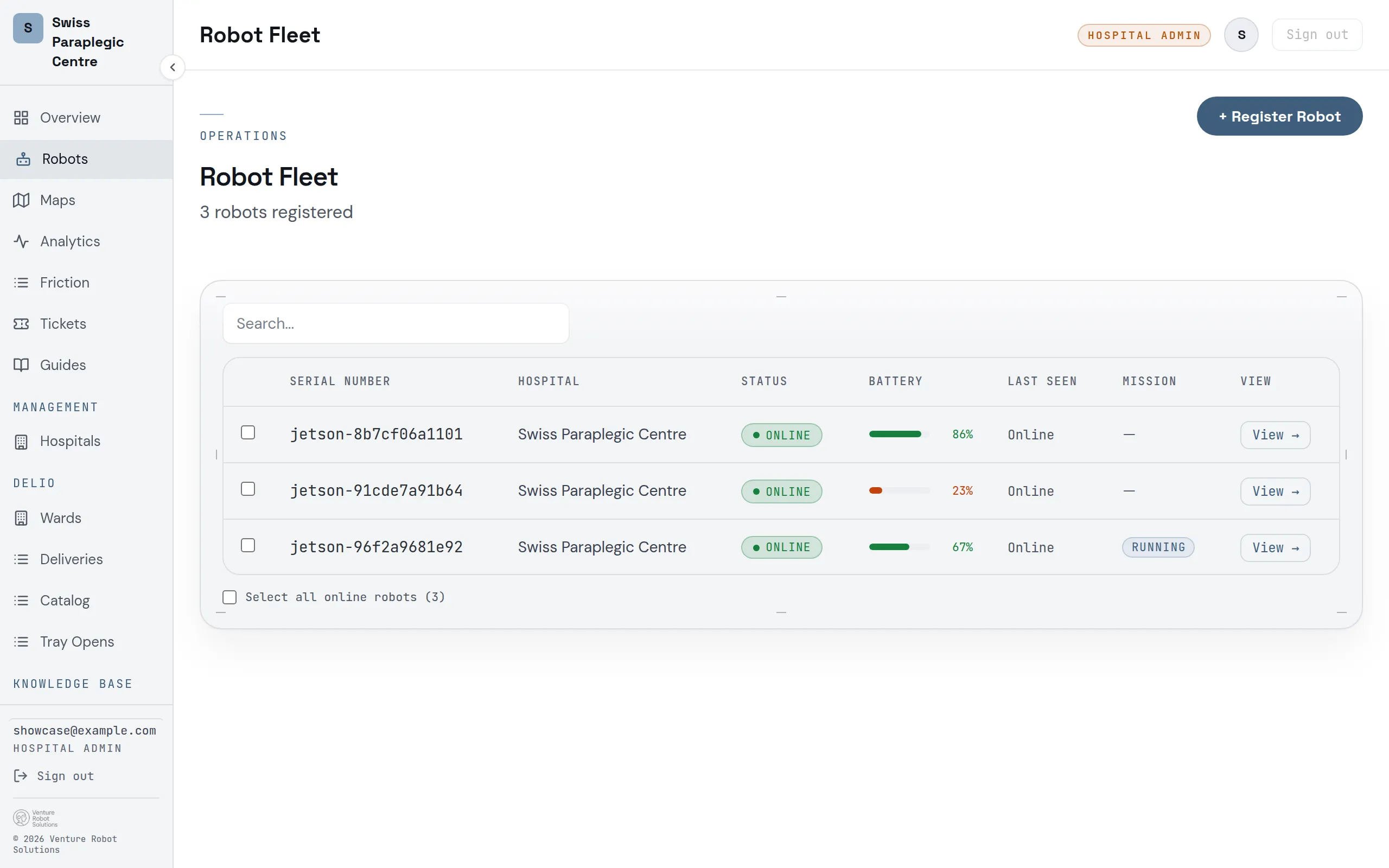
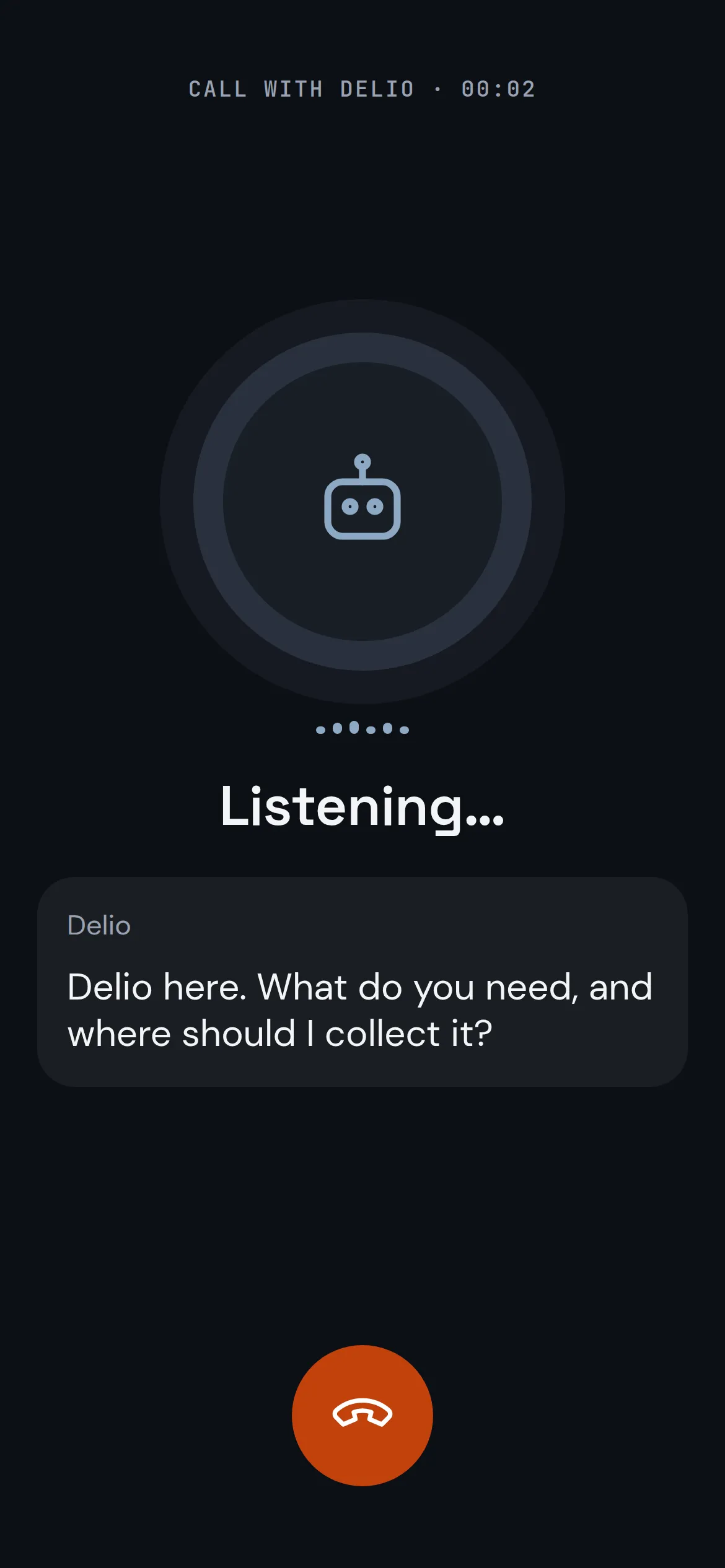
Product screens · simulated data
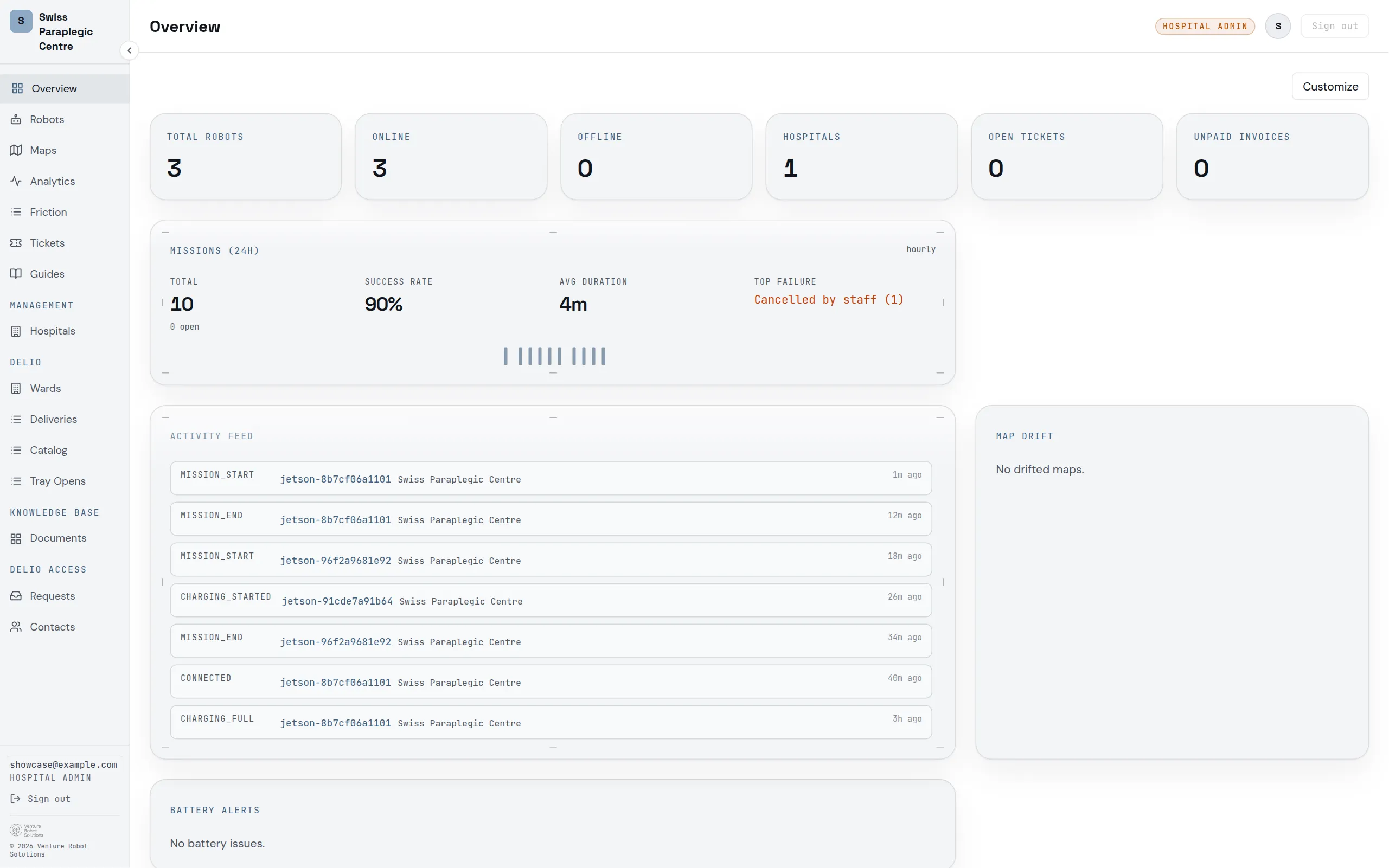
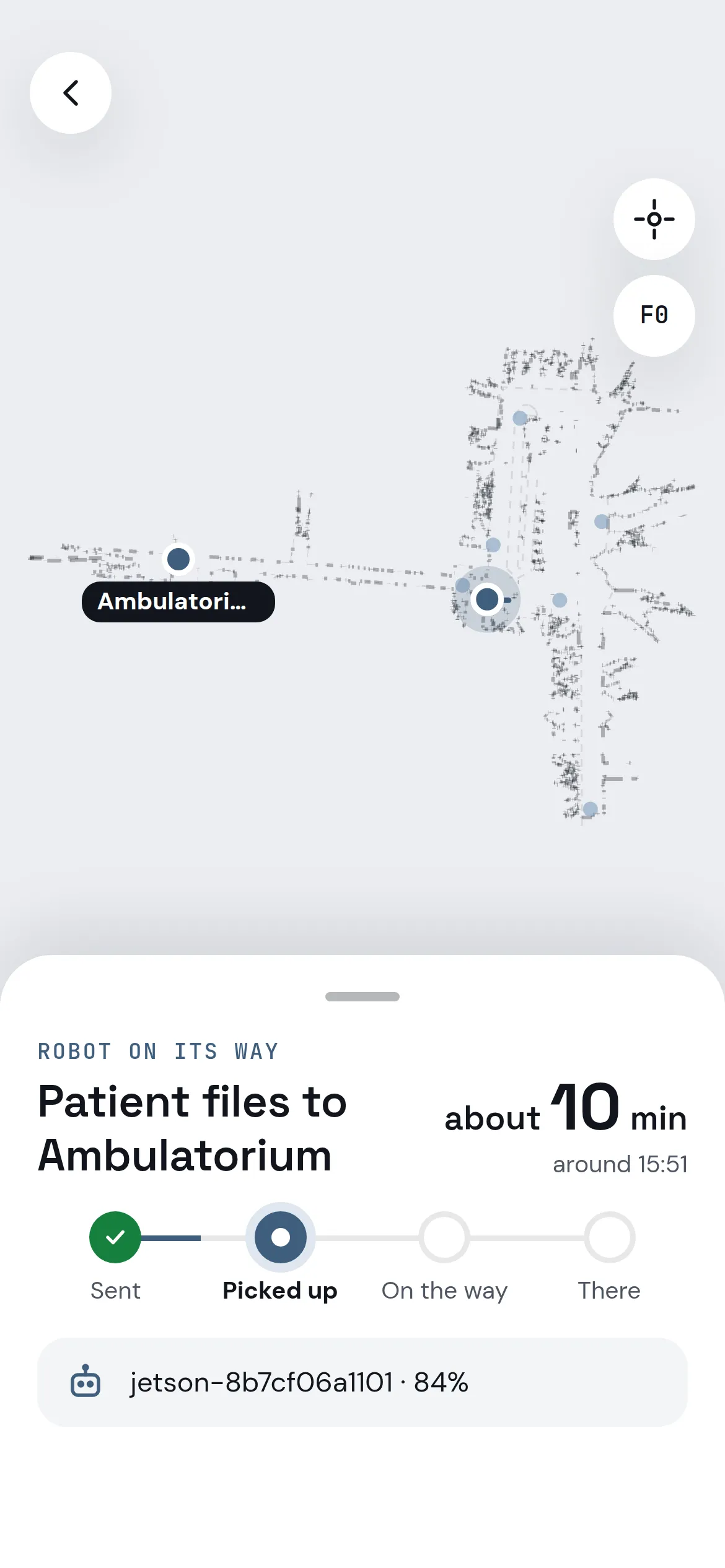
Product screens · simulated data
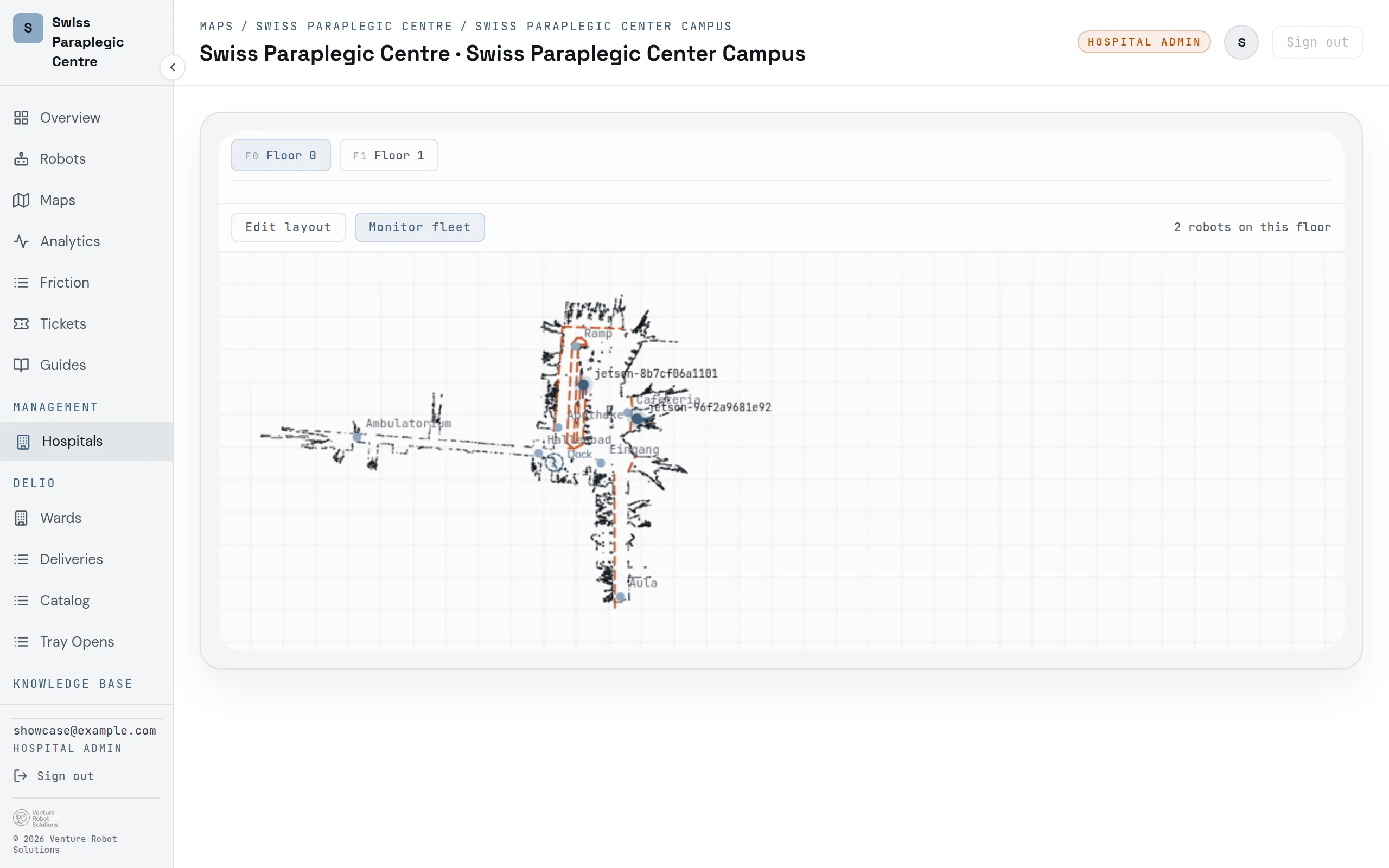
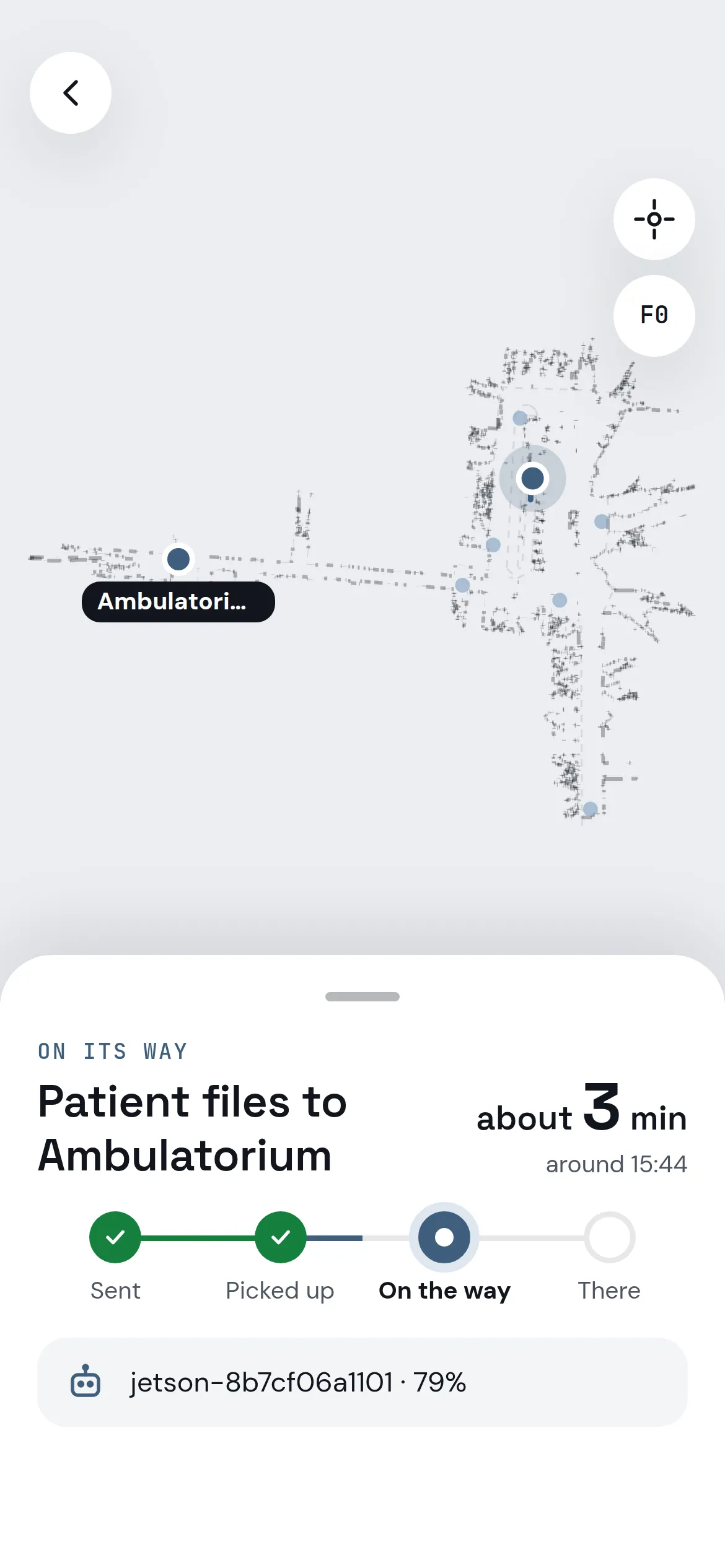
Product screens · simulated data
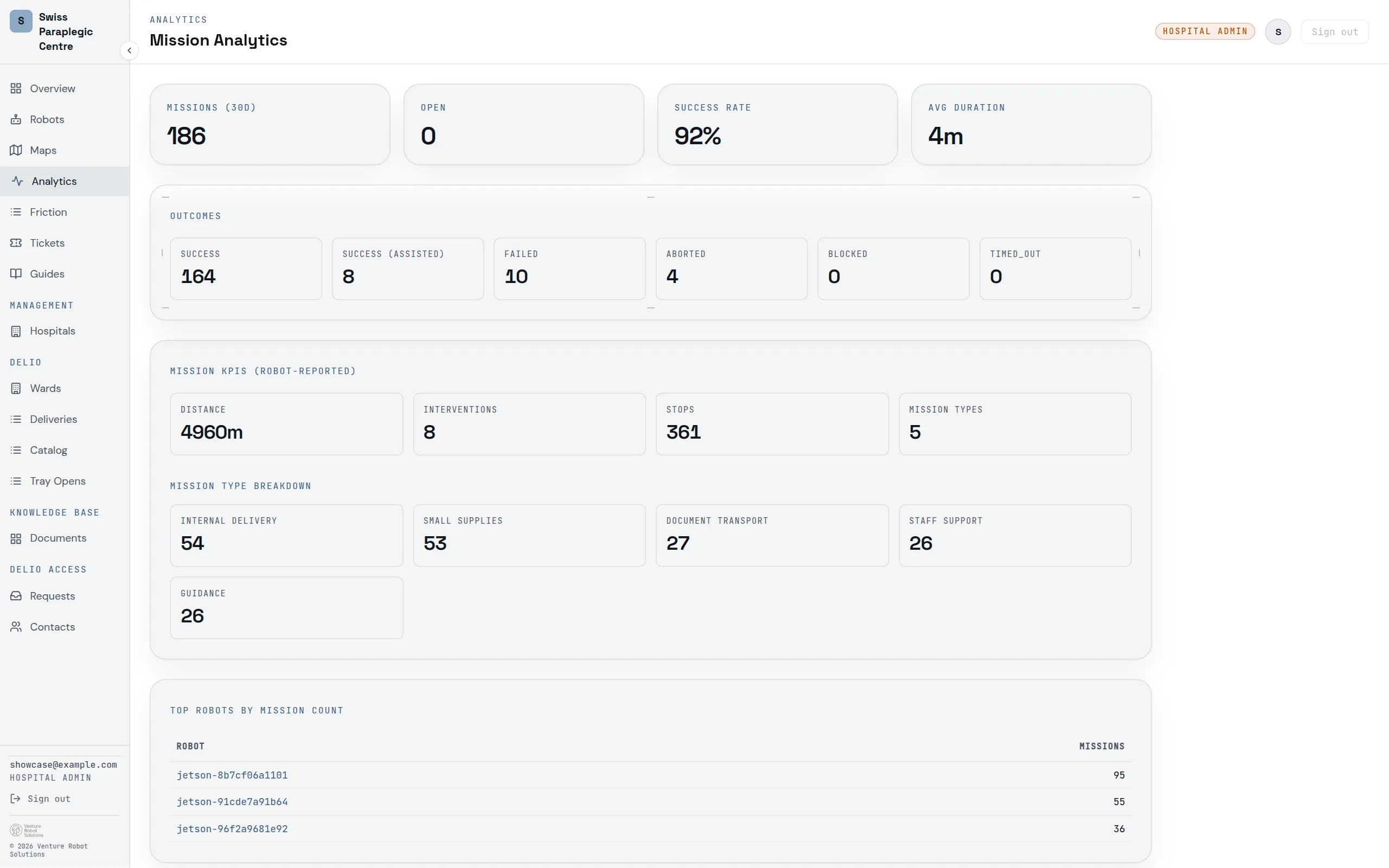
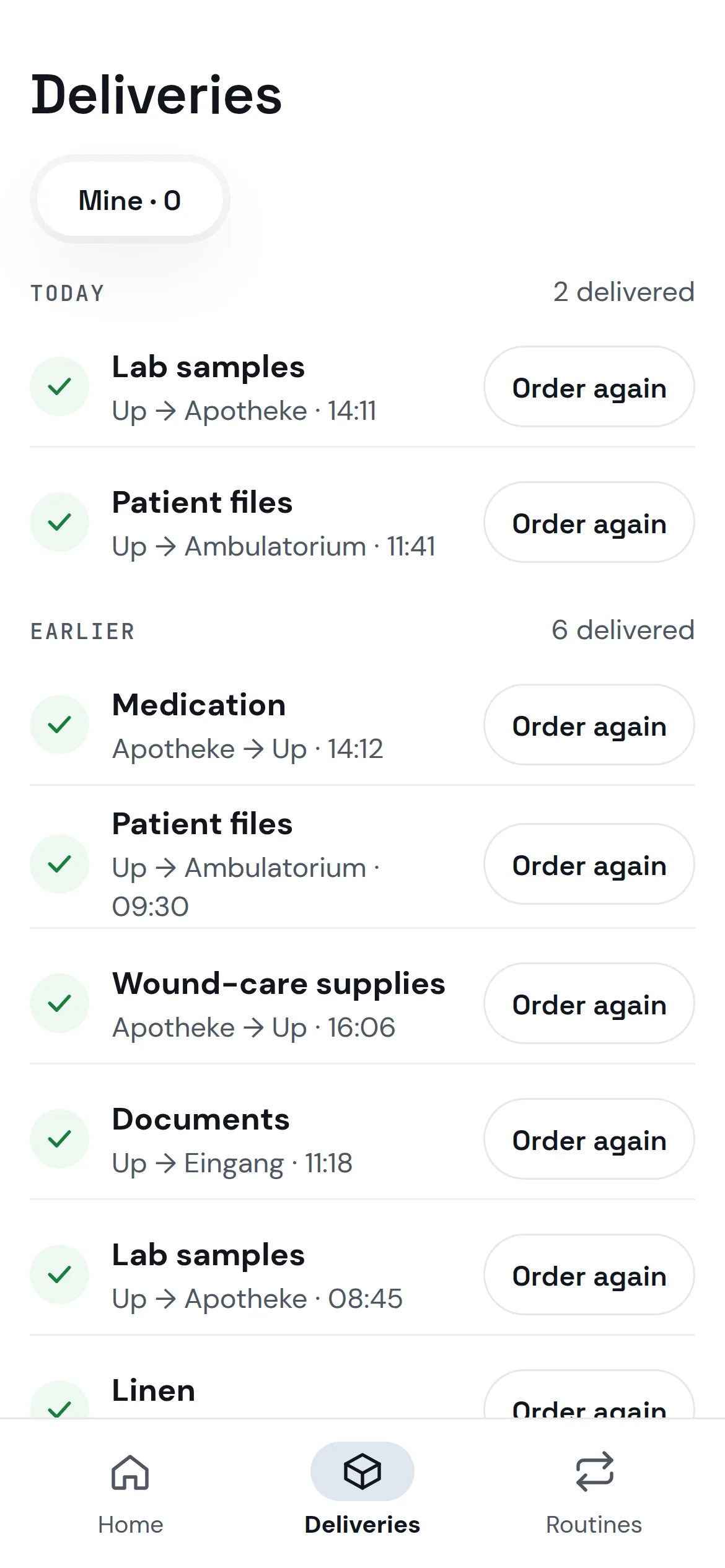
Product screens · simulated data
Staff app and operations dashboard run on the same live data, across every robot, floor and site.
Discuss a deployment →

The robot takes ramps and elevators, with door and lift state in the decision loop. Floor transitions are the hardest stretch of a hospital route, and the part we engineer most.
No person or wheelchair contact. Six near-misses, each corroborated against LiDAR.
Identified from mission logs and corrected in the field within four days.
Two signed letters of intent with Swiss care providers. Scheduling and funding are in progress; we name a site only once it is contracted.
Behavior Engine


Both renders are design work for robot #2, not the robot in service today.
Perception and behavior run on the robot itself, not in a data centre.
Every decision carries a reason code and can be replayed in 3D.
Behavior changes ship as versioned updates, validated against recorded missions before they reach a site.
Video and perception are processed on the robot. Voice interaction is the one function that uses the cloud; no video or images leave the building.










We start with your workflows, identify where robotic automation can create measurable value, and define the right evaluation format.
A short session on your actual routines, volumes and constraints.
Floors, elevators, doors and corridor traffic reviewed on site.
A defined evaluation format with agreed metrics, duration and scope.


